
In short
Clean water isn't always safe. Learn how to choose the right water purifier by testing your water first, then matching the technology, output, and servicing to your family's needs.
Are you in a situation where you know you need something, but you are not sure exactly what? You want your loved ones and the people you value to drink safe water, and you know you need a water purifier. But some questions come to mind, like “how to choose a water purifier?” or “how to choose the best water purifier?”
If you are also in such a situation, don’t worry; we are here to help you just like a friend. This is a simple water purifier buying guide to help you choose the best water purifier with confidence.
Water that looks clean is not always safe to drink. That is why this water purifier buying guide begins with a simple question: Is your water actually safe? Once you know the answer, choosing a purifier becomes much easier and much less stressful. Let’s go through it together, step by step, like a friend who wants the best for your family.
Is Your Water Really Safe? What You Can’t See Can Still Matter
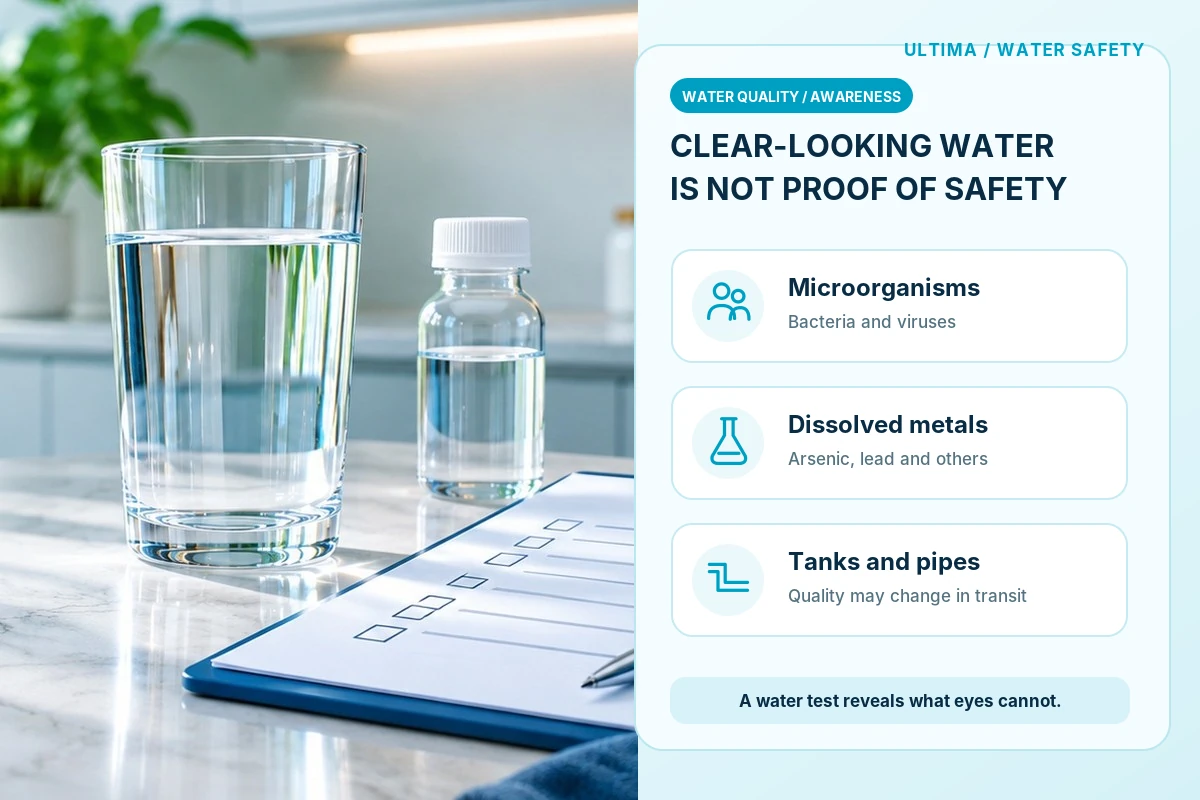
Many of us trust water because it looks clean, smells fine, and tastes normal. But groundwater in some areas may carry arsenic, supply water may carry bacteria or a strong chlorine smell, and old pipes and tanks can add their own problems.
Drinking such water every day may increase the risk of stomach illness and, over many years, more serious health problems. Children and elders need extra care. This is not meant to frighten you. It is a gentle reminder that safe water deserves a little attention.
How to Choose the Best Water Purifier: A Quick Checklist
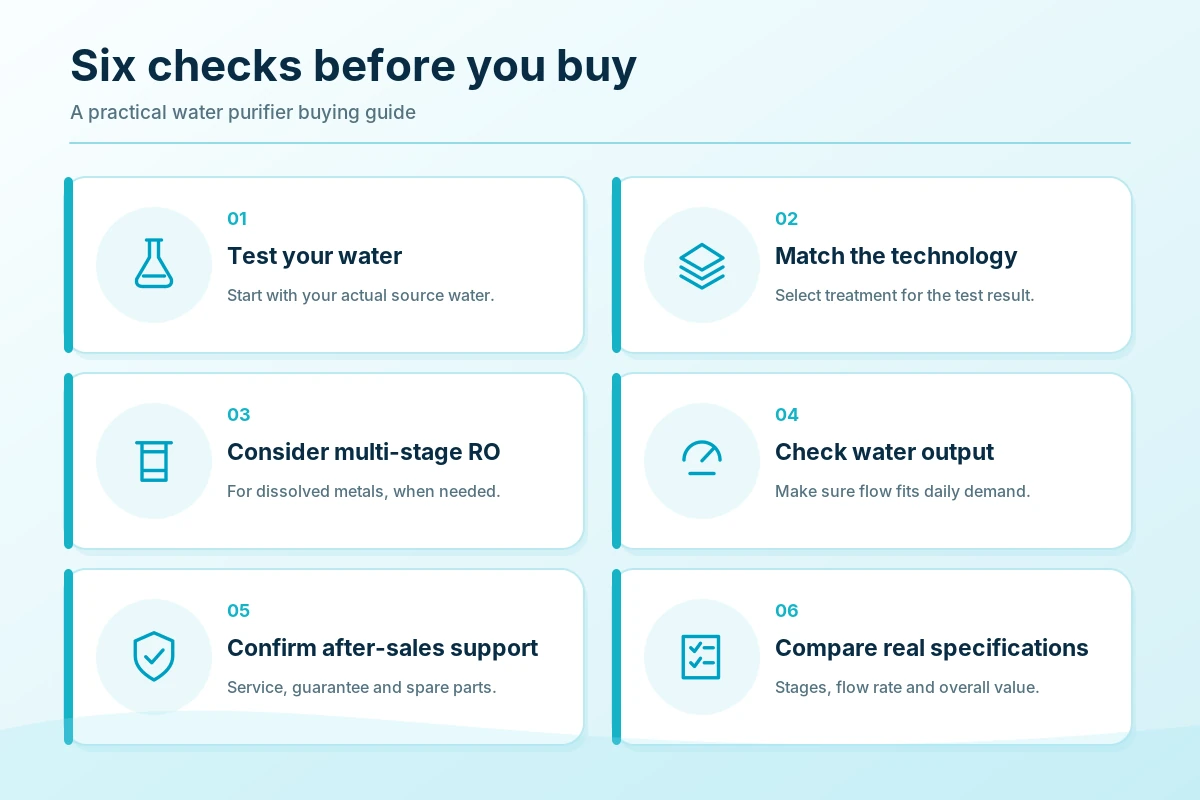
The best water purifier is not the most expensive one. It is the one that fits your water, your family, and your budget. Before you decide:
- Test your water first
- Match the technology to your test result
- Choose multi-stage RO if heavy metals are a concern
- Pick an output that suits your family or team
- Confirm servicing, warranty, and spare parts
- Compare stages and flow rate, not just price
We’ll explain each one below.
What to Check Before Buying a Water Purifier: Start With a Water Test
The first thing to check is not the brand, the price, or the design. It is your water.
Water quality changes from one area to the next, sometimes from one building to the next. A water purifier that works perfectly in your cousin’s flat may be the wrong choice for yours. So start with a water test, not a price comparison.
A good test shows whether heavy metals like arsenic, lead, and cadmium are present, and whether bacteria are a problem. Ultima offers a free water test, and the report is yours whether you buy or not. Test again if you move home, change your water source, or notice a new taste or smell.
How to Choose a Water Purifier: Know Your Technology (Gravity, UF and RO)
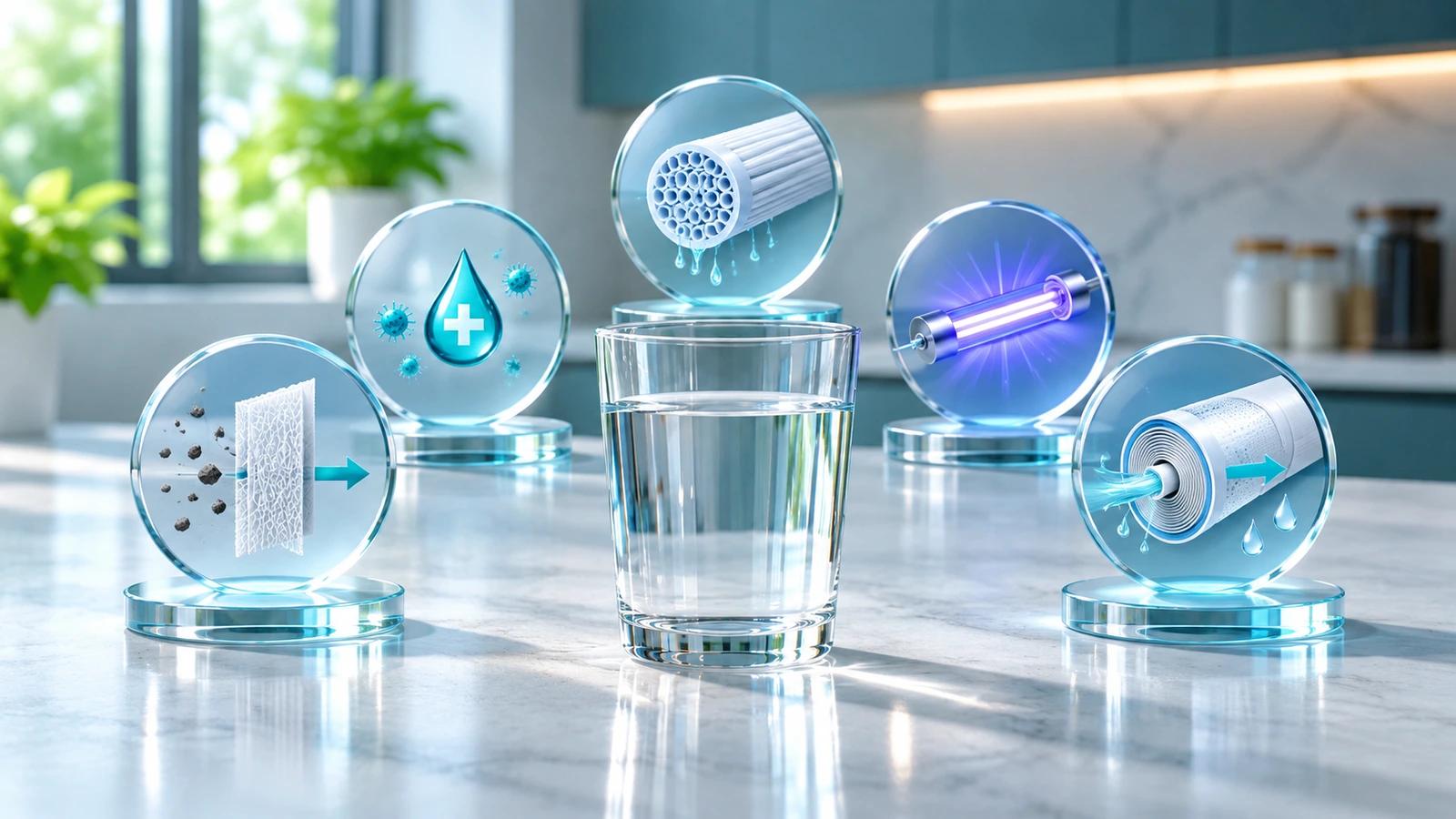
Not every water purifier does the same job. Knowing the difference is the heart of how to choose a water purifier:
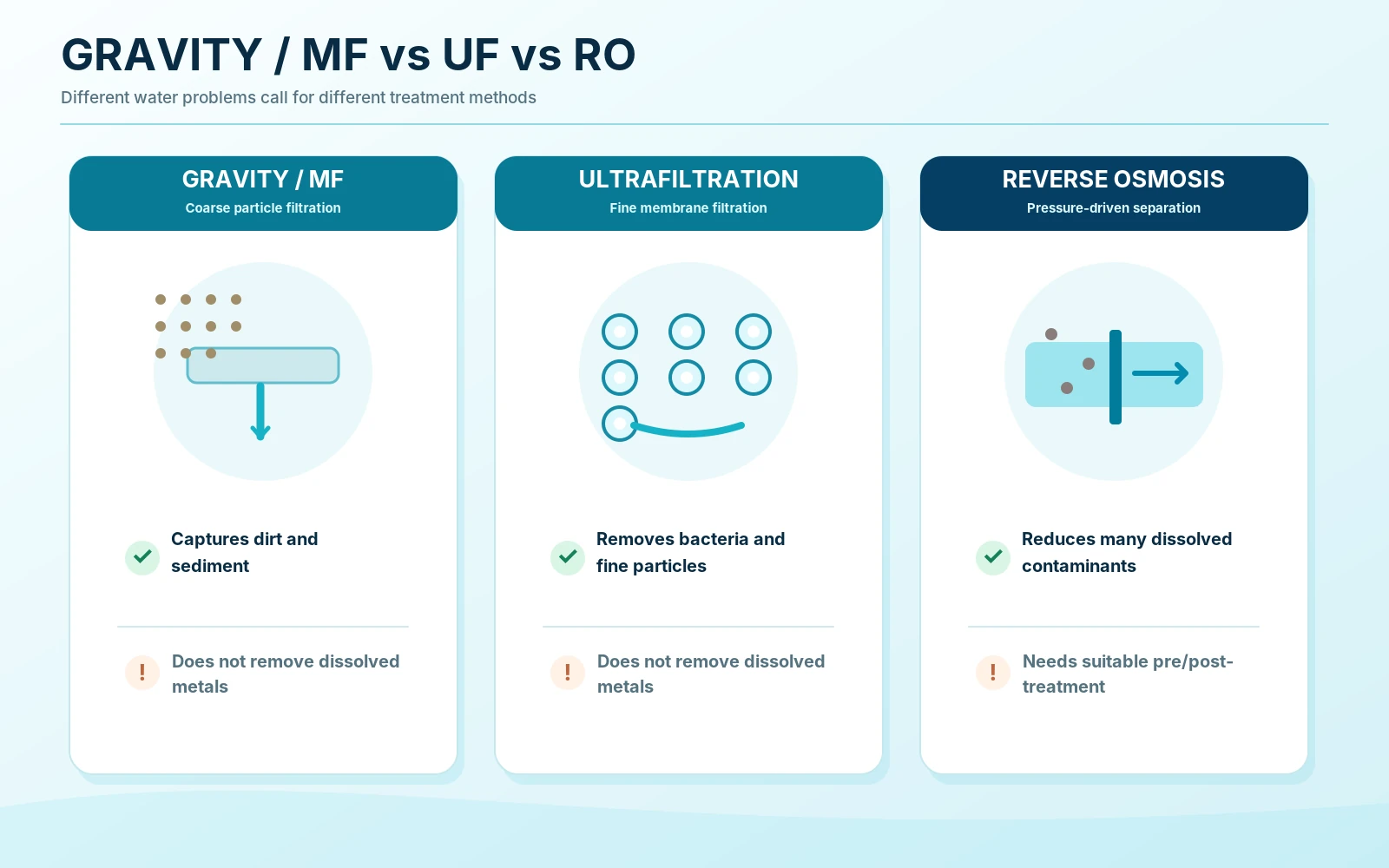
- Gravity or MF filters: catch dirt and sediment, but do not remove dissolved metals like arsenic.
- UF (hollow fibre): removes bacteria and many particles, but not dissolved chemicals and metals.
- RO (reverse osmosis): pushes water through an extremely fine membrane that blocks dissolved salts, heavy metals, bacteria, and viruses.
Is an RO Water Purifier the Right Choice for You?
If your water test shows dissolved contaminants such as arsenic or other heavy metals, an RO water purifier may be a suitable option.
One gentle warning: basic RO alone does not catch everything. Look for a multi-stage system with proper pre-filtration and post-treatment, so chlorine, odour, and other chemicals are handled too.
And if your test shows few dissolved impurities, your water may need a different solution. The right answer always depends on what is in your water.
Stages, Output and Minerals: What the Specifications Really Mean
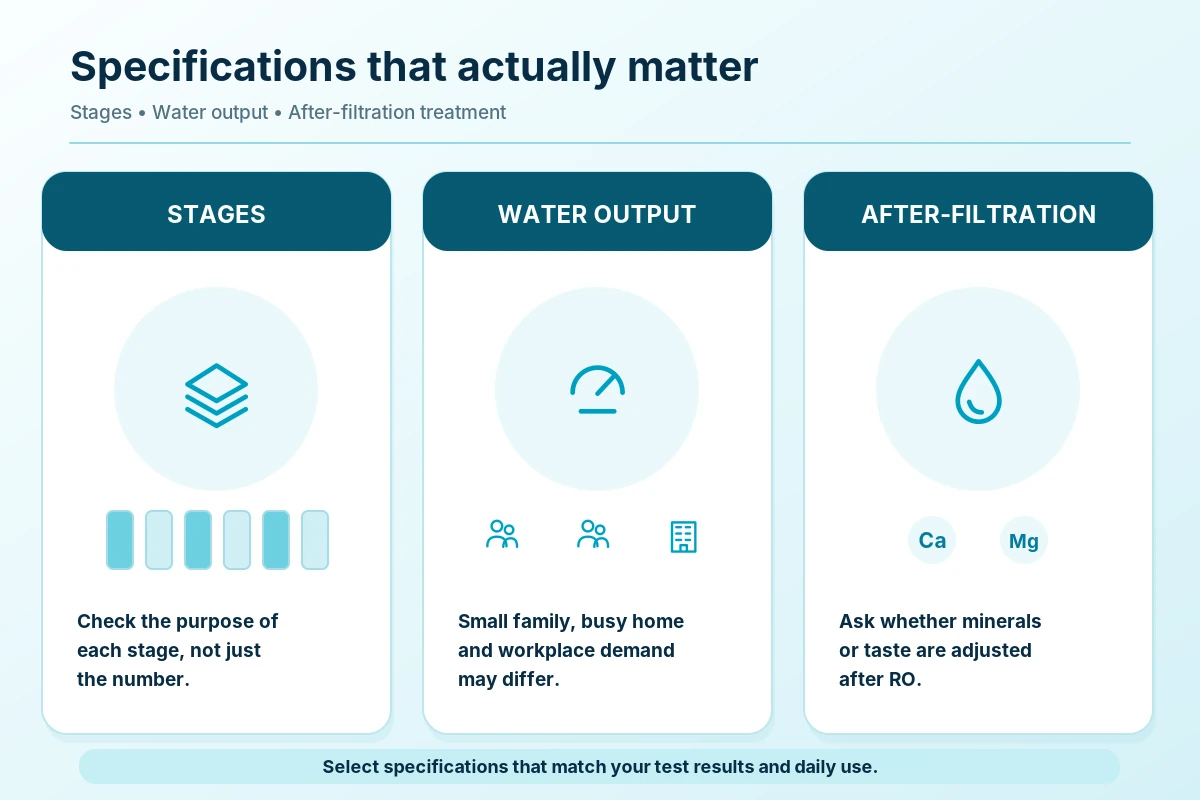
- Stages: look for 6 to 7+ well-designed stages that cover bacteria, chemicals, and taste.
- Water output: around 16 litres per hour is enough for most small families. Joint families, or homes that fill many school bottles, may want higher flow. Offices need steady flow so nobody waits in line.
- Minerals: RO also reduces some natural minerals. Children get most of theirs from food, but ask what the purifier does after filtration.
Servicing, Warranty and Spare Parts: The Cost Nobody Talks About
A water purifier is not a buy-once-and-forget appliance. Filters and membranes need replacing, and a neglected purifier cannot protect you properly.
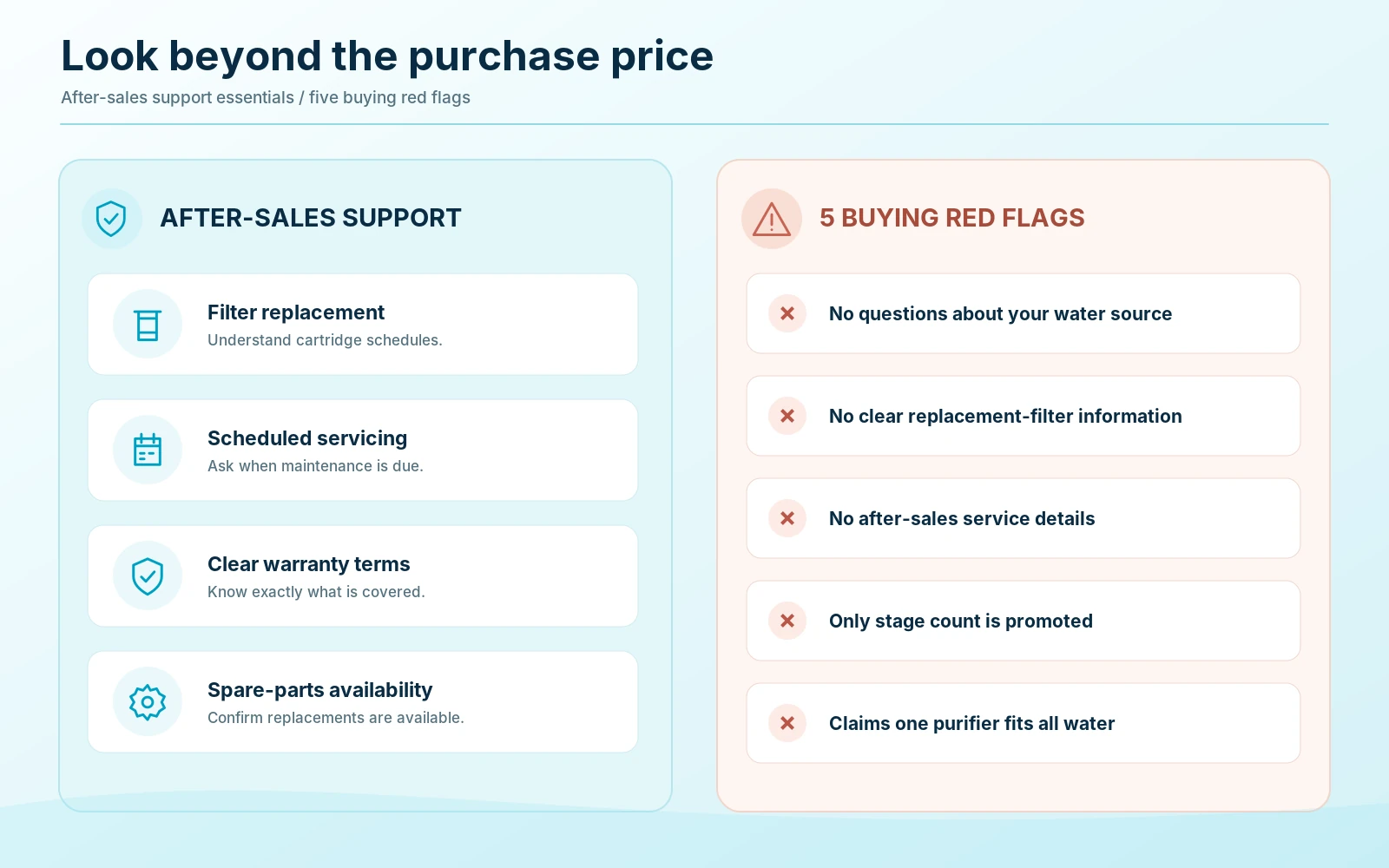
Before you pay, ask about scheduled servicing, warranty, AMC, and spare parts. Free installation, EMI, and Cash on Delivery also take a lot of the stress out of buying.
5 Red Flags Before Buying a Water Purifier
- A seller recommends a purifier without asking about your water source.
- No clear information about replacement filters.
- No after-sales service information.
- Only the number of “stages” is promoted.
- You are told one purifier works for every type of water.
Which Ultima Water Purifier Suits Your Home or Office?
- TriShield RO (H7): 7+ stages, about 16 Lt/h. A strong all-round choice for families.
- Crystal RO Gen 2 (F6): 6+ stages, about 16 Lt/h. Suits smaller families.
- Fontessa RO (X2): 7+ stages, about 126 Lt/h. Built for big families and busy kitchens.
- Zenith RO (X5): 6+ stages, about 126 Lt/h. High flow for large households and growing teams.
- Ultima Light Commercial RO Gen 2.0: 6+ stages, about 126 Lt/h. Built for larger workplaces with heavier daily demand.
Not Sure Yet? Take a Free Water Test Before You Decide
You now know what to check before buying. The next step is finding out what is actually in your water.
Already have a water report? Talk to our team, and we’ll help you compare suitable options.