

In short
Clear water can hide bacteria, arsenic, lead, and other risks. Discover what may be in your drinking water and why testing should come before choosing a purifier.
Do you know what is actually in the water you drink every day? You look at the glass; it is clear, no smell, no strange taste. But is it safe?
So let’s ask the question most of us never ask: what is really in your water?
Clear water is not always safe water. Read that again, slowly, because your family drinks this water every day. What your eyes see in that glass is only the beginning of the story. The things that can hurt your family most are the things you will never see.
Clear Water Is Not Always Safe Water
Contaminated drinking water doesn't announce itself. Bacteria, viruses, and parasites are invisible. So are dissolved heavy metals like arsenic, lead, and cadmium. A glass can pass every test your eyes, nose, and tongue can offer and still carry something your body would rather not meet every day.
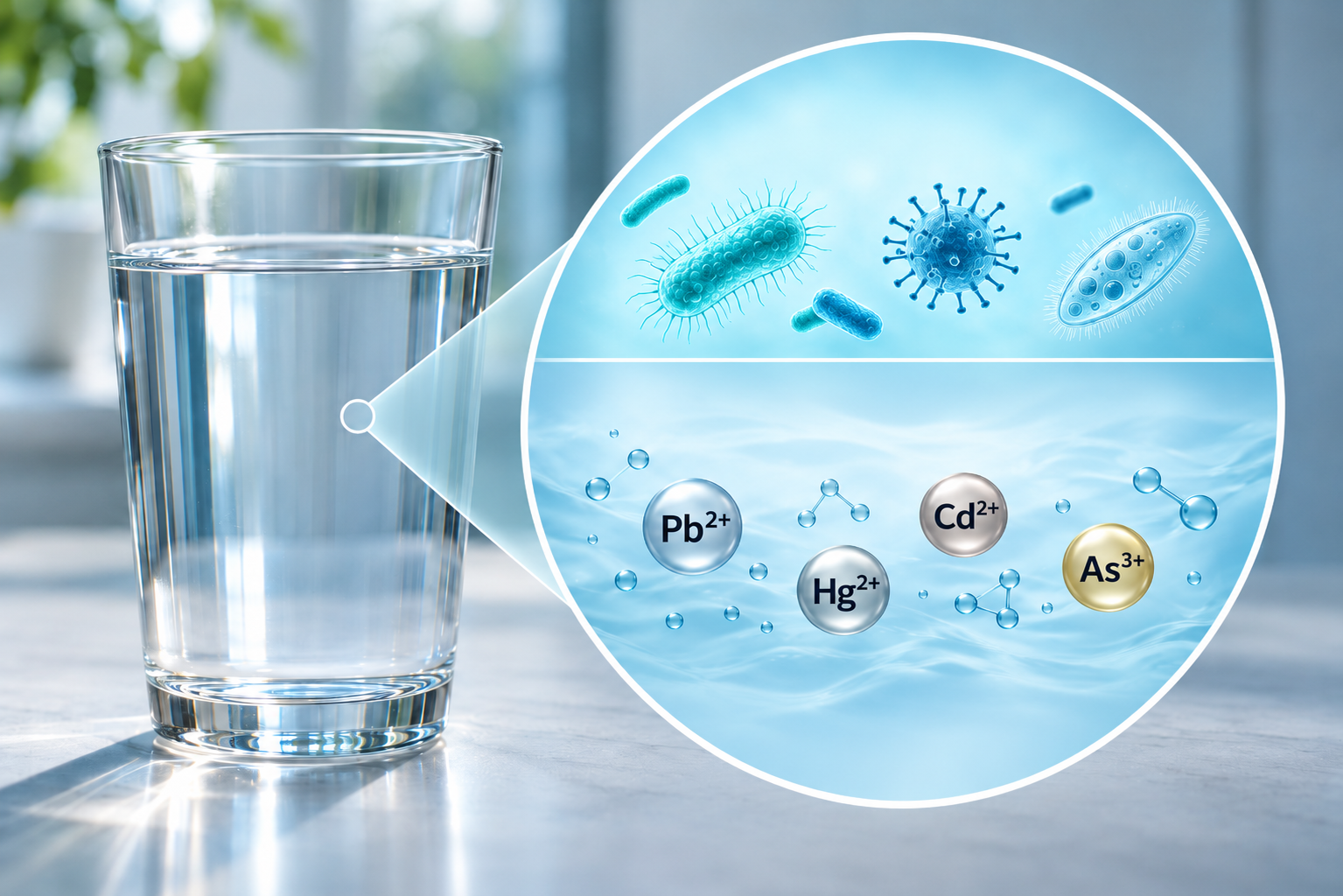
Water can also become contaminated after it leaves its source, through old pipes, rarely cleaned rooftop tanks, or storage containers. That is why even a trusted source can't always promise a safe glass at your table.
Waterborne Diseases: The Illnesses We Often Dismiss
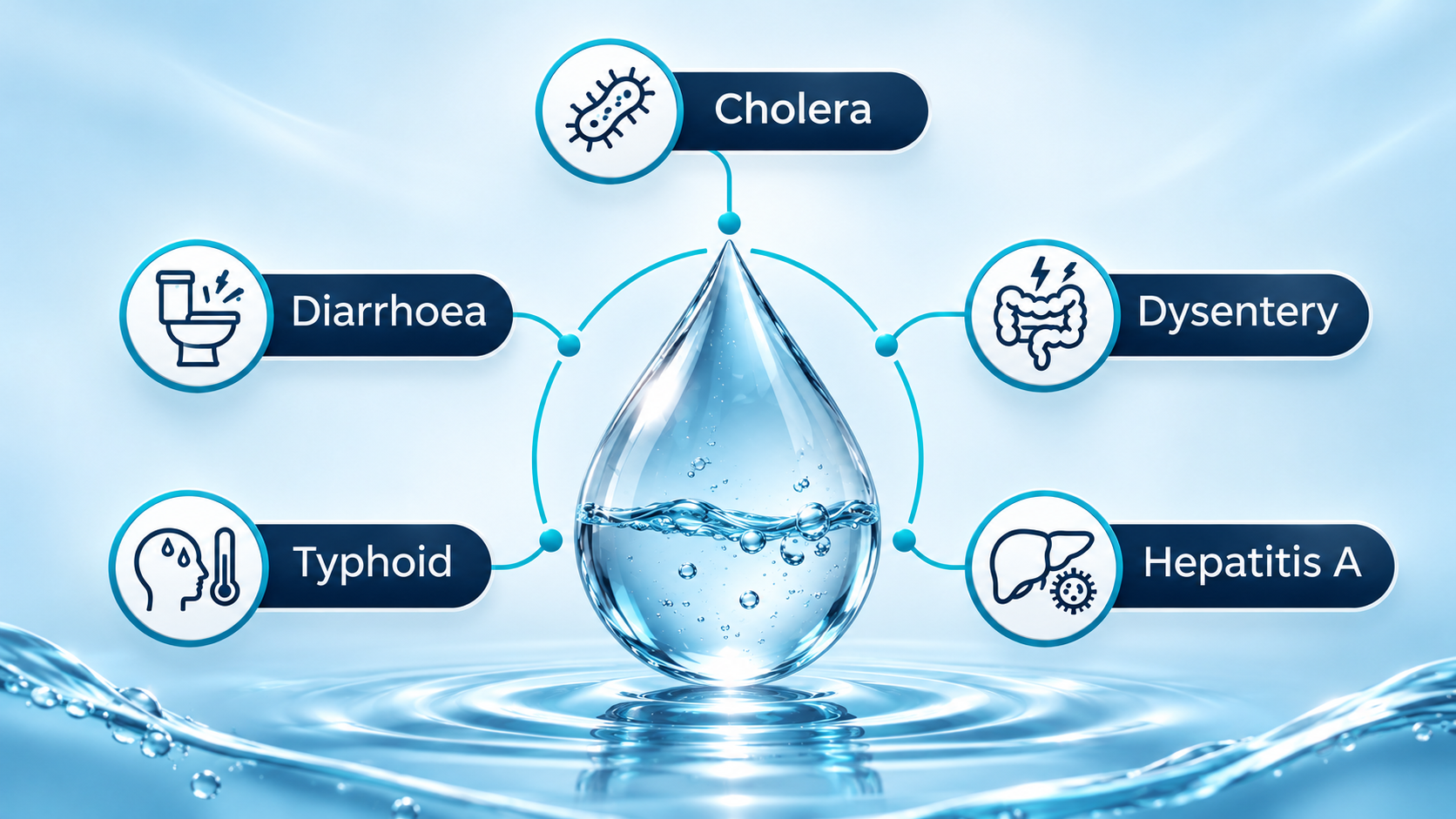
Contaminated water can spread diarrhoea, cholera, dysentery, typhoid and hepatitis A. These are known as waterborne diseases. Some pass in a few days. Others can turn serious quickly, especially for young children, the elderly and anyone with a weaker immune system.
The World Health Organization estimates that microbiologically contaminated drinking water contributes to roughly 505,000 diarrhoeal deaths every year worldwide. Behind that number are real people and families affected by something as basic as the water they drink.
Repeated stomach problems, especially in children, do not necessarily mean the water is the cause. But when the same problem keeps coming back, it may be a sign worth paying attention to, and a good reason to check the water.
Heavy Metals in Drinking Water: The Slow, Silent Risk
The health effects of contaminated water are not always sudden. Heavy metals in drinking water can work quietly, and you may never notice them in a single glass.
The World Health Organization says long-term exposure to arsenic from drinking water and food can cause cancer and skin lesions, including cancers of the bladder and lungs. WHO also points out that the greatest threat comes from contaminated groundwater, which is why this matters so much for families who rely on tube wells.
According to the World Health Organization, young children are especially vulnerable to lead, which can cause profound and permanent harm to the development of the brain and nervous system. Again, lead raises the risk of high blood pressure, cardiovascular problems, and kidney damage. High exposure during pregnancy can cause miscarriage, stillbirth, and low birth weight.
A state health agency notes that most cadmium in drinking water has no taste or smell, so it can only be identified through testing. Boiling does not remove it.
That is the hardest part of this story. You cannot see these metals, smell them, or taste them, and boiling won’t make them go away.
We share this not to frighten you, but because awareness is the one protection that costs almost nothing. And the first step is simple: find out what is actually in your water.
But How Do You Know What's in Your Water?
Here is the uncomfortable truth: you can't know by looking.
Boiling kills many germs, but it does not remove arsenic, lead, or cadmium. A common market filter may catch dirt and sediment, but may not deal with dissolved metals.
Unsafe drinking water can look and taste perfectly normal. A proper water quality test can help reveal what your eyes, nose, and tongue cannot.
A Water Quality Test: The Small Step That Changes Everything
A water quality test turns worry into facts. It shows whether heavy metals are present, whether bacteria are a problem, and what your water actually needs. Then you can decide calmly: a suitable water purifier, a different solution, or nothing at all if your water is fine.
The test comes first. The decision comes second.
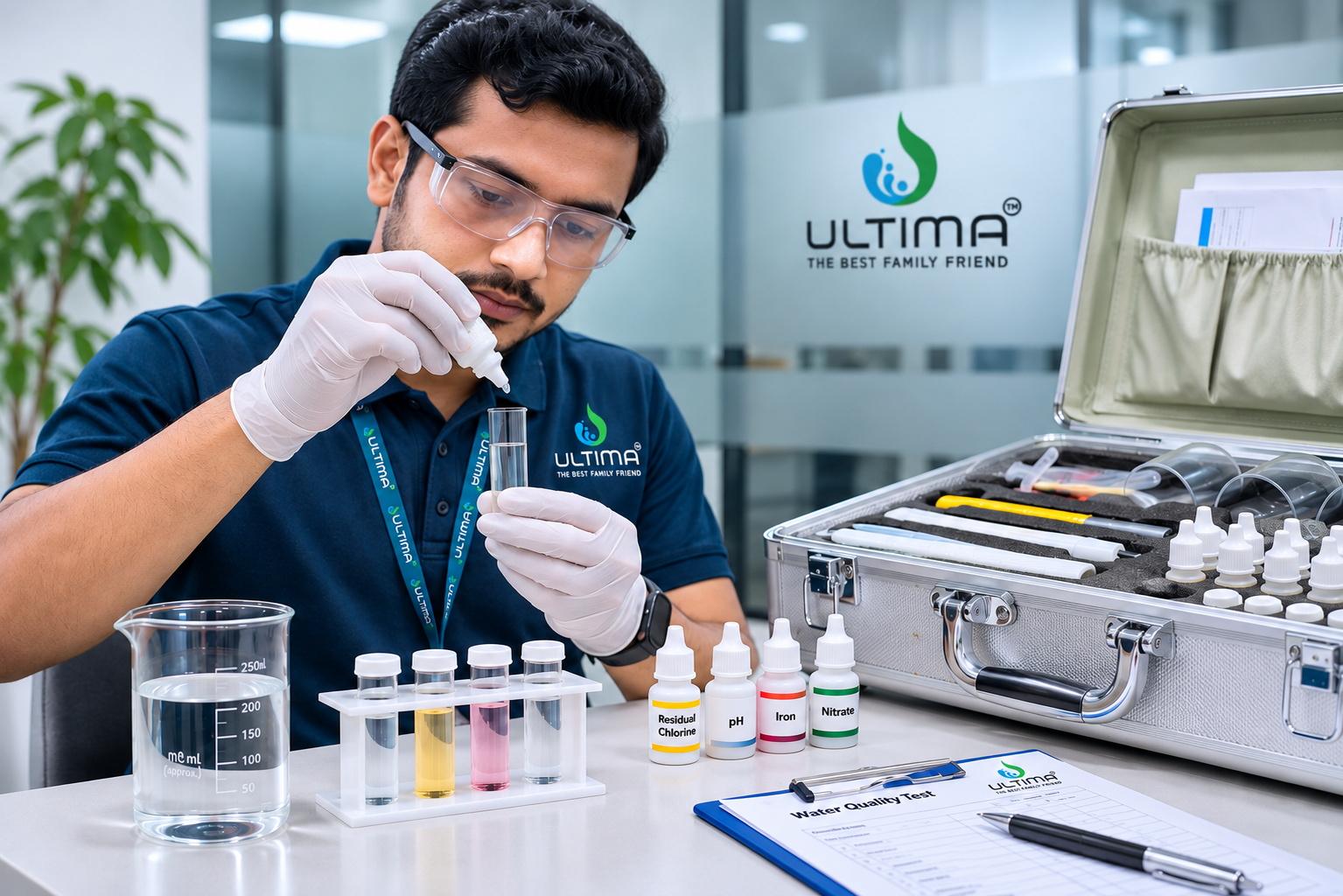
Ultima offers a Free Water Test, and the report is yours whether or not you ever buy anything. Test again if you change homes, change your water source, or notice a new taste or smell.
Ready for Safe Drinking Water? Here's Where to Go Next
Knowing the risk is only the first step. The next question is: what is actually in your water, and what kind of purification does it need?
If you are thinking about buying a purifier, don't choose on price or appearance alone. Read our water purifier buying guide to understand what to check before buying a water purifier.
Where do you need safe water?
- For your family: read Which Water Purifier Is Right for Your Home?
- For your workplace: read Which Water Purifier Should You Buy for Your Office?
Find Out What’s Really in Your Water
If you are concerned about the quality of the water, the first step is simple: find out what is in your water.
Ultima’s free water test can help you better understand your water quality and identify possible concerns before you decide what to do next.
Test your water first. Understand what it needs. Then choose the right solution.