
In short
Clear-looking water can still hide bacteria, viruses, or heavy metals. Learn five simple checks and one reliable way to tell whether your water is safe.
Take a look at the water you drink every day. Is it clear? Does it smell normal? Does it taste fine?
If you answered yes to all three, it’s natural to feel your water is safe. Most of us do. But those are only the first things you can check, and they don’t tell the whole story.
So how do you really know if your water is safe to drink? Here is a gentle, step-by-step way to find out. Five small checks, and one that gives you a clear answer.
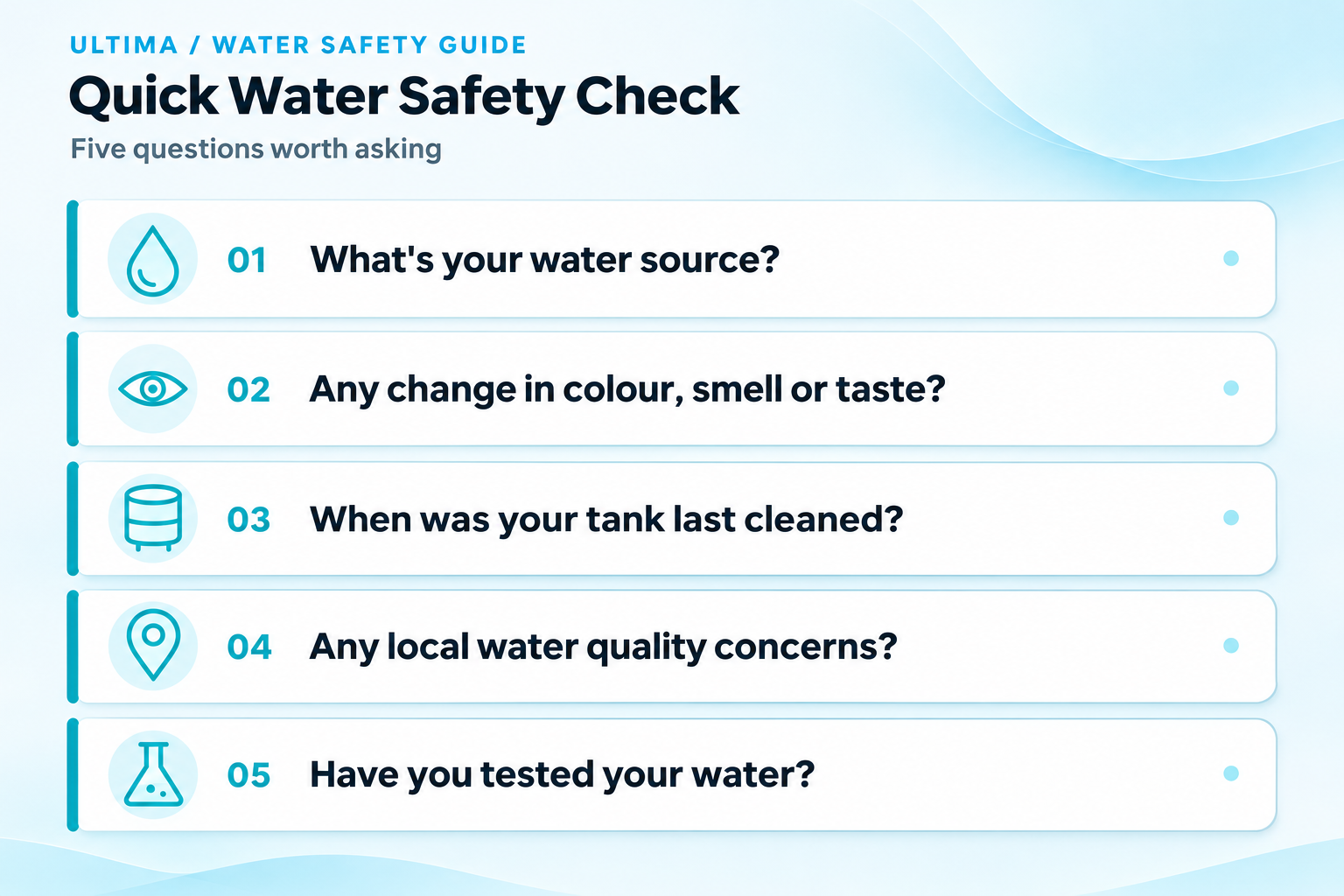
Quick Water Safety Check
Ask yourself these five questions:
- Do I know where my drinking water comes from?
- Has its colour, smell, or taste changed recently?
- Do I know when our water tank was last cleaned?
- Do I know whether my area has any water quality concerns?
- Have I ever done a water quality test?
1. Know Where Your Water Comes From
Is your water supplied through pipes, drawn from a tube well, or stored in a rooftop or underground tank? Different sources can carry different risks.
Groundwater, for example, may carry natural contaminants such as arsenic in some areas. Supplied water may pick up bacteria or a strong chlorine smell along the way.
Think of your source as the first page of the story, not the last. Knowing your water source helps you ask the right questions about its safety.
2. Look for Changes in Colour, Smell or Taste
This is one of the easiest first checks you can do at home. Fill a clean, clear glass and hold it up to the light.
- Colour: Is the water cloudy, yellowish, or brownish? Can you see particles?
- Smell: Is there a strong chlorine smell or any unusual odour?
- Taste: Does it taste metallic, bitter, or different from usual?
A sudden change in any of these can be a sign that something has changed, and it is worth taking seriously.
But here is the gentle catch: water can pass all three checks and still contain things you cannot see, smell, or taste. Bacteria, viruses, and heavy metals can all be invisible.
Learn more: Diseases Caused by Contaminated Water: What a Clear Glass Won't Tell You
3. Check Your Tank, Pipes, and Storage
Your water may leave its source in good condition. But what happens before it reaches your glass?
Water tanks, old pipes, and storage containers can all affect water quality if they are not cleaned and maintained. A few simple questions can help:
- When was the tank last cleaned?
- Do you see dirt, sediment, rust, or slime inside the tank or at the tap?
- Are tank lids kept closed, and are drinking containers washed regularly?
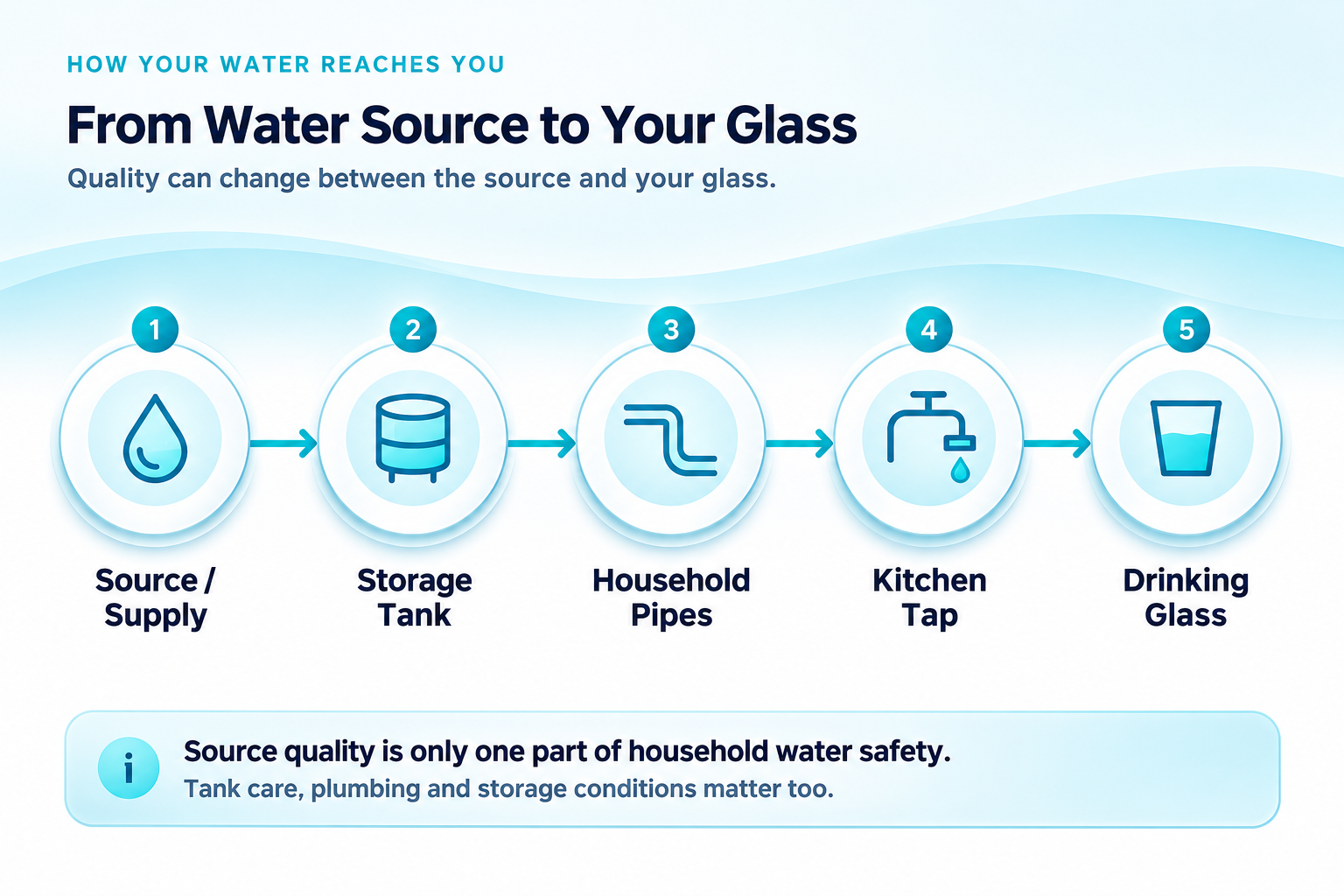
Safe water can become unsafe on its way to your glass. A quick look at your storage is a small act of care for the people you love.
4. Know the Hidden Risks Your Source May Carry
Some of the biggest risks in water are the ones you can’t see.
Germs are too small to see. Water can look clear and still carry them, especially if pipes or tanks are old or not cleaned.
A strong chlorine smell is a small clue about what your water has been through. It is worth noticing, but it doesn’t tell the full story.
Tube well water may carry metals like arsenic in some areas. They have no colour, smell, or taste, and boiling does not remove them.
Knowing your source helps you ask better questions. A water test gives you the answers.
5. Stop Guessing and Test Your Water
You can check the source. You can look at the colour. You can notice the smell. You can inspect the tank and pipes.
But none of these alone can tell you everything that is inside your water.
If you’ve been wondering “how to check my water properly”, this is the answer: a water quality test. It turns questions into facts. It shows whether heavy metals are present, whether bacteria are a problem, and what your water actually needs.
What Should You Do Now?
Ultima offers a Free Water Test in Dhaka and other service areas, and the report is yours whether or not you ever buy anything. Test again if you move home, change your water source, or notice a new taste or smell.
The test comes first. The decision comes second.
What Should You Do After You Know What’s in Your Water?
Finding a problem doesn’t automatically mean you need the most expensive purifier, or the same solution as another home. It simply means you can now choose with confidence.
When you’re ready, read our water purifier buying guide to understand what to check before choosing one. Then pick your path:
👉 For your family: read Which Water Purifier Is Right for Your Home?
👉 For your workplace: read Which Water Purifier Should You Buy for Your Office?