
In short
MF, UF, UV and RO don't do the same job: some stop germs, only one removes dissolved heavy metals. Learn which purifier matches your water before you buy.
You walk into a shop and see different types of water purifiers. You'll see MF, UF, UV, RO, and more. Every brand seems to claim its technology is the best.
But here is something most buyers are never told: “not every purifier does the same job”.
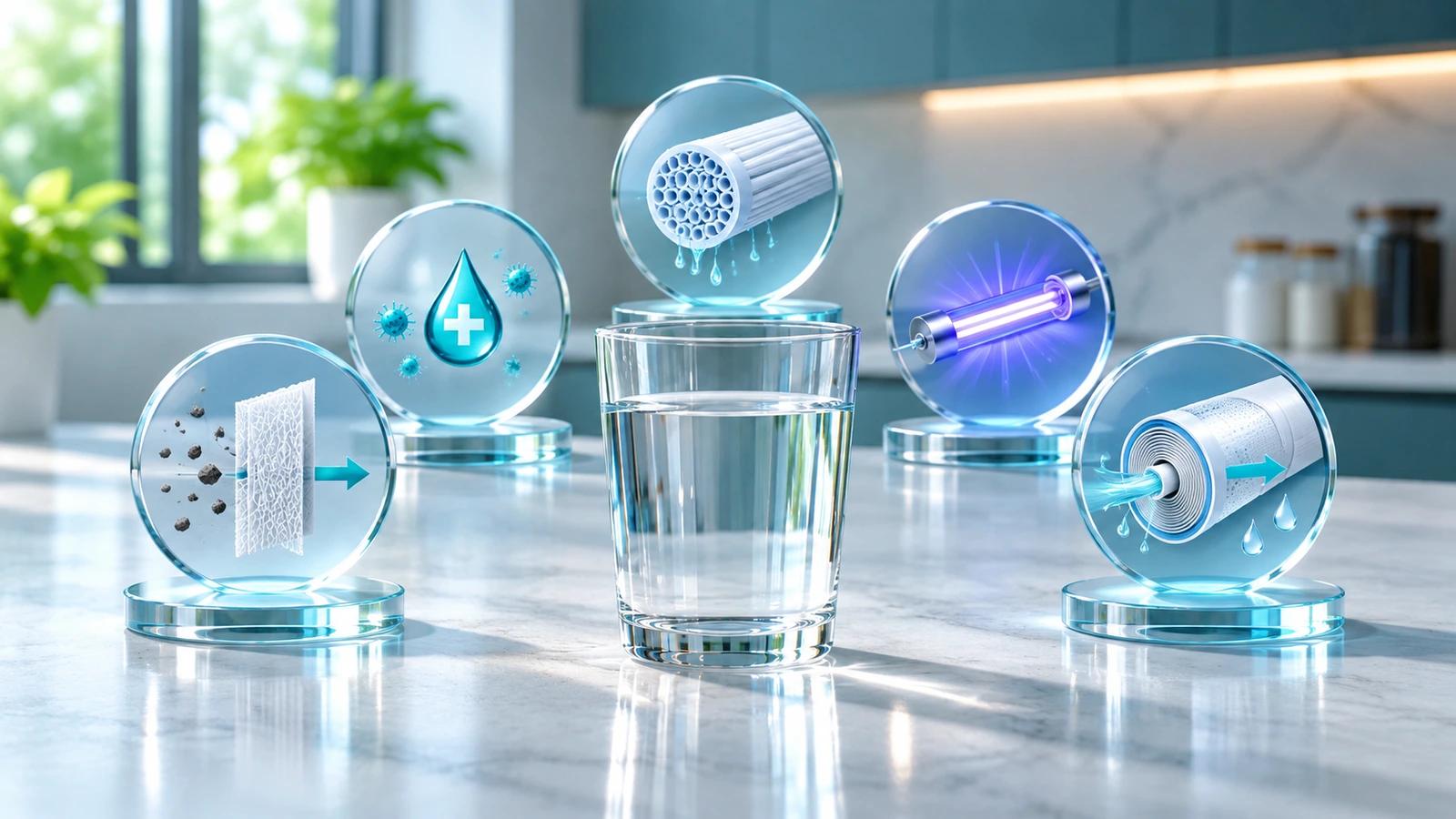
Some only stop dirt. Some may stop germs like viruses and bacteria. One technology is designed to remove many contaminants dissolved directly in the water.
Not All Water Purification Technologies Do the Same Job
Think of your drinking water as facing two different kinds of trouble:
- Germs and particles: dirt, bacteria, and viruses
- Dissolved contaminants: things mixed into the water itself, like heavy metals
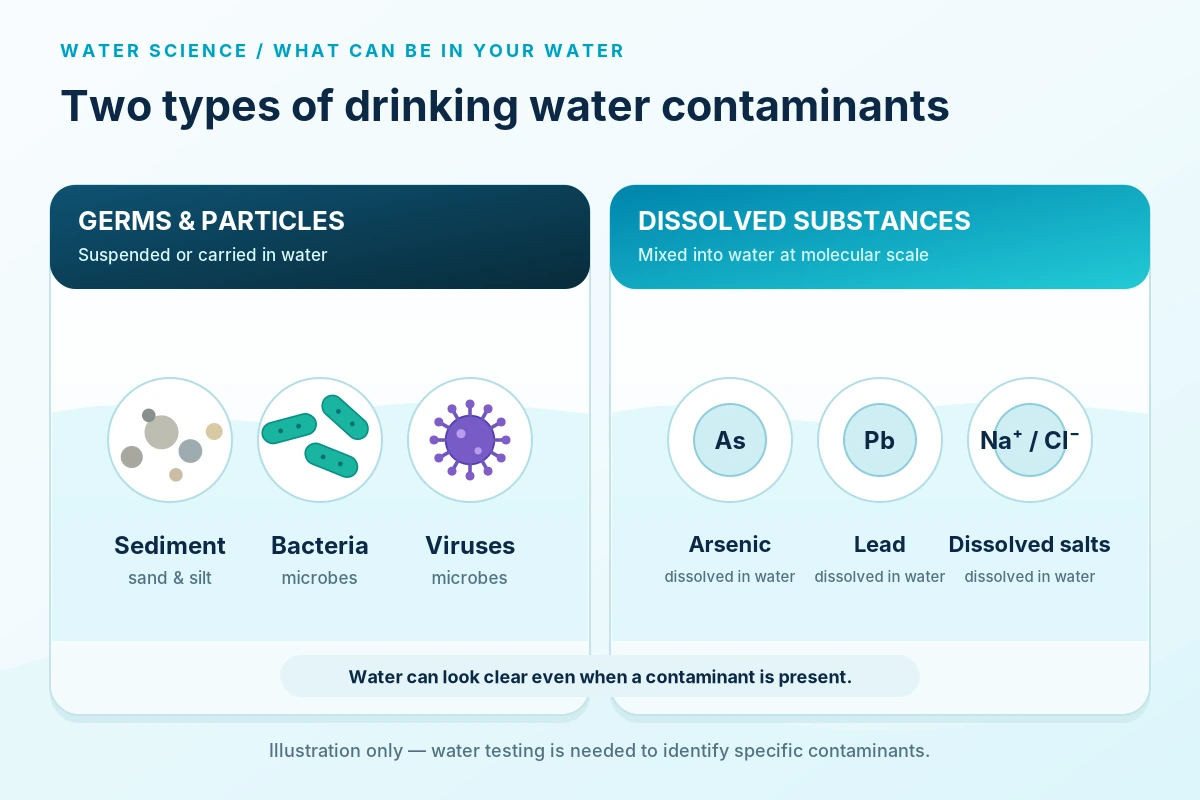
Most water purification technology is good at the first kind. Far fewer handle the second. That difference decides which purifier is right for your family.
Let’s walk through the main types of water purifiers together, one by one, so you can choose with confidence instead of guessing.
Microfiltration (MF): The Dirt Catcher
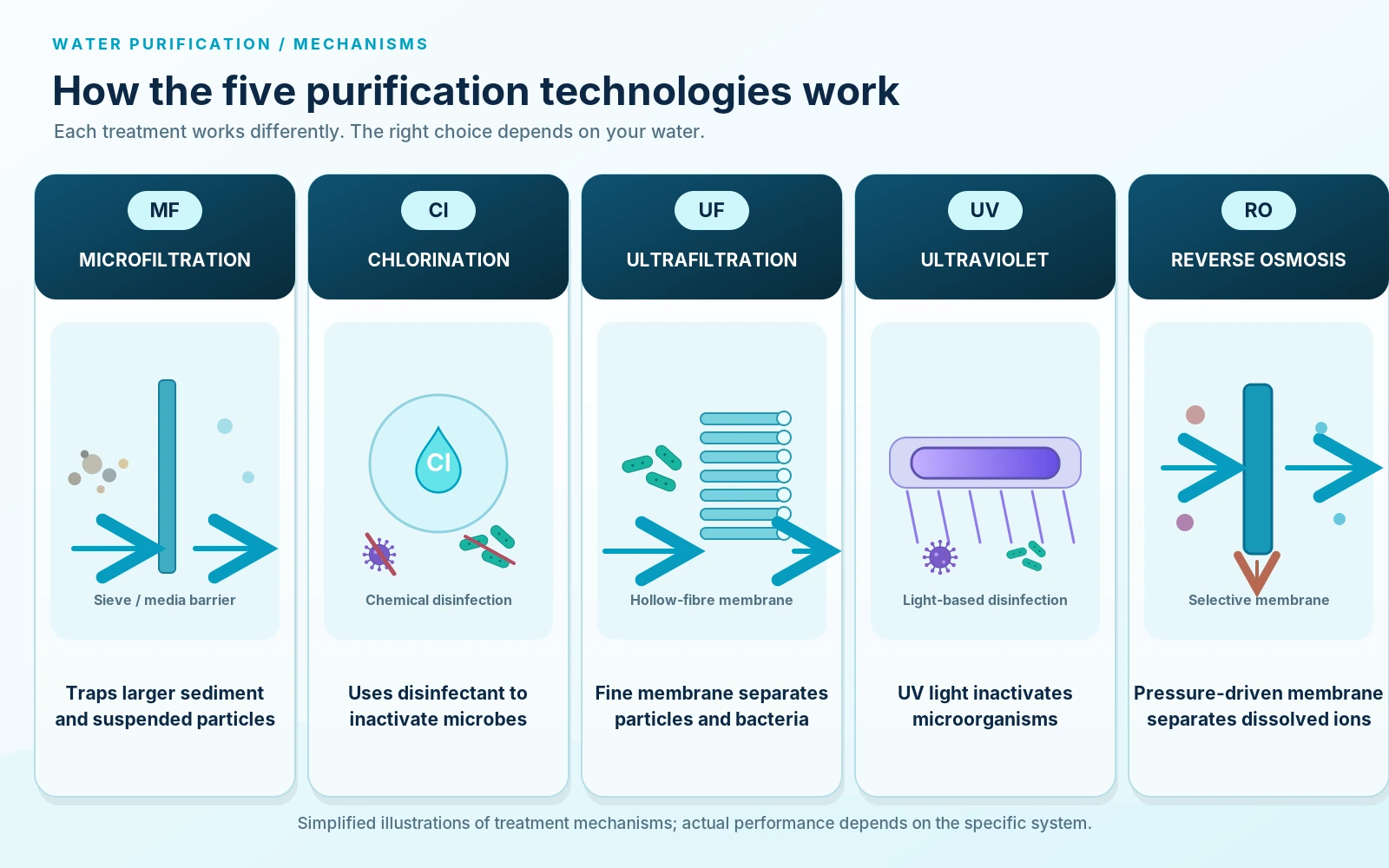
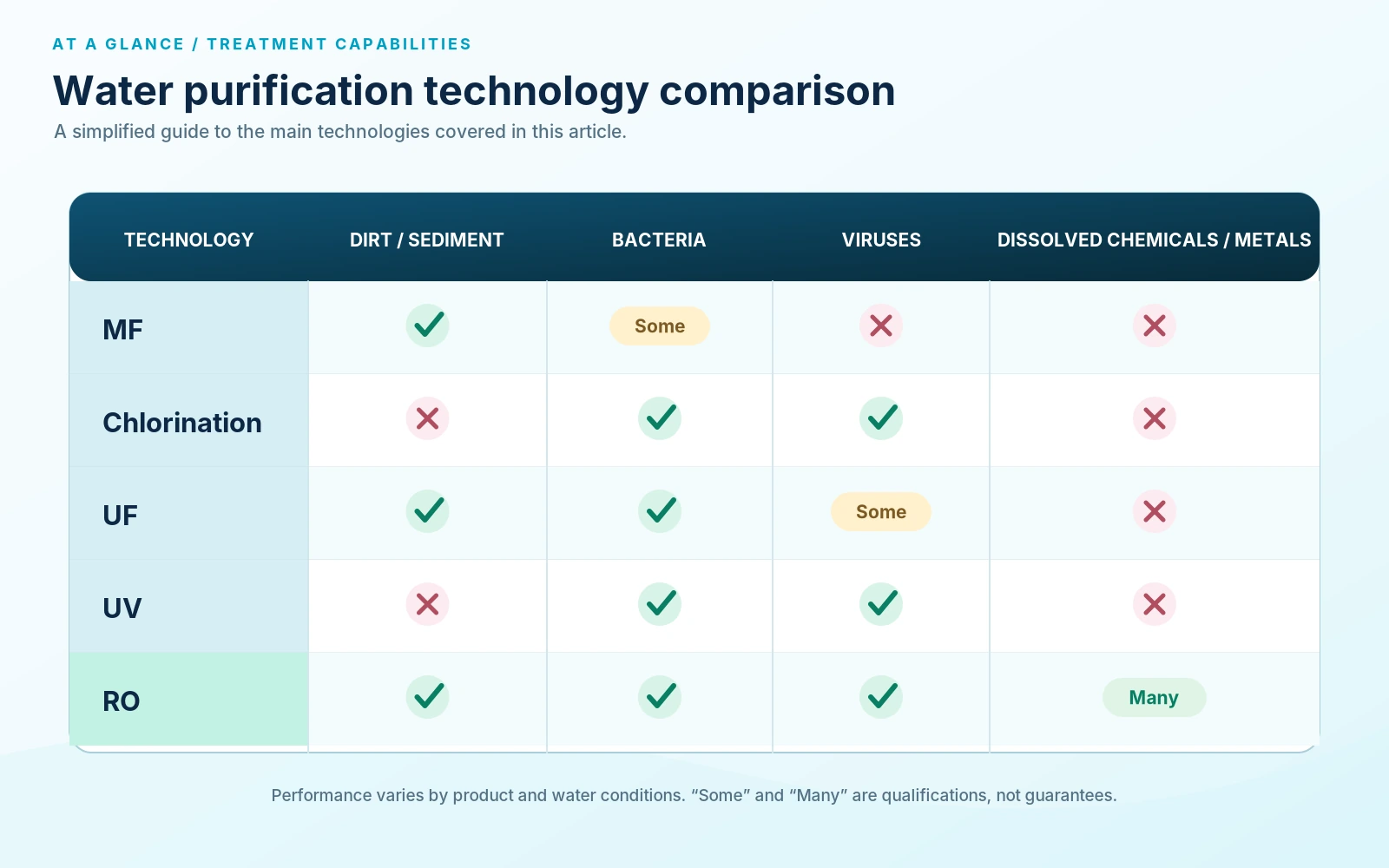
MF filters catch dirt, sand, and sediment. They make cloudy water look cleaner, which can be useful. Clear-looking water from an MF filter can still carry what you cannot see. MF filters can remove parasites and may remove some bacteria, but they do not remove viruses or chemicals such as lead and arsenic.
Chlorine-Based Purifiers: Strong Against Germs
Some purifiers and treatments use chlorine to kill bacteria and viruses. That is a real benefit. But chlorine doesn’t remove heavy metals, and it can leave a bad taste or smell behind.
Ultrafiltration (UF): Finer, But Still Not Enough for Metals
UF uses hollow fibres with extremely small pores. It removes bacteria and very fine particles; it may reduce some viruses depending on the membrane. But dissolved chemicals and heavy metals are too small and too well-mixed for UF to catch.
Ultraviolet (UV): Light That Neutralizes Germs
UV purifiers use ultraviolet light to inactivate bacteria and viruses. It’s a good germ-fighting step. But UV doesn’t remove anything from the water, so heavy metals and chemicals pass straight through.
RO Water Purifier: When the Problem Is Dissolved in the Water
Reverse osmosis pushes water through an extremely fine membrane that blocks dissolved salts, heavy metals, bacteria, and viruses. That is why an RO water purifier is designed to remove dissolved contaminants.
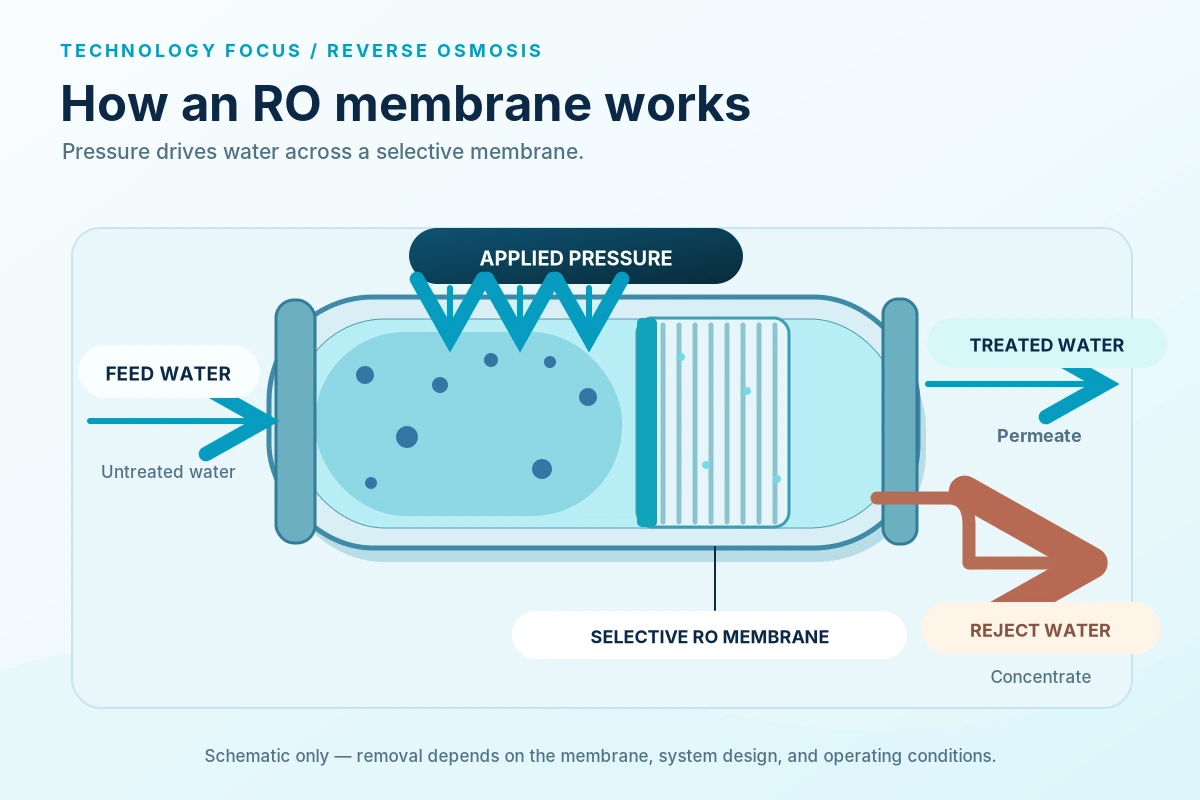
Why does this matter? Heavy metals in drinking water have no colour, smell, or taste. The World Health Organization says long-term exposure to arsenic from drinking water and food can cause cancer and skin lesions, and that contaminated groundwater is the greatest threat. Boiling doesn’t remove heavy metals either.
RO isn’t magic. Look for a multi-stage system with proper pre-filtration and post-treatment, and ask about servicing, warranty, and spare parts. RO can also reduce some naturally occurring minerals, so it is worth asking what the system does after filtration.
Quick Comparison
Which Water Purifier Is Best for You?
The honest answer: it depends on your water.
If your water only has dirt, a simpler filter may do. If germs are the main concern, UF or UV may help. But if your water contains heavy metals or other dissolved contaminants, RO may be one of the strongest technologies to consider, provided the specific system is designed and verified for those contaminants.
Many families in Bangladesh have reason to take this seriously. According to a WHO regional document, around 20 million people are exposed to arsenic above Bangladesh’s national standard of 0.05 mg/L. Using WHO’s stricter guideline of 0.01 mg/L, the estimate rises to around 36 million people. That is why the best water purifier in Bangladesh is not the most famous one. It is the one that matches your water.
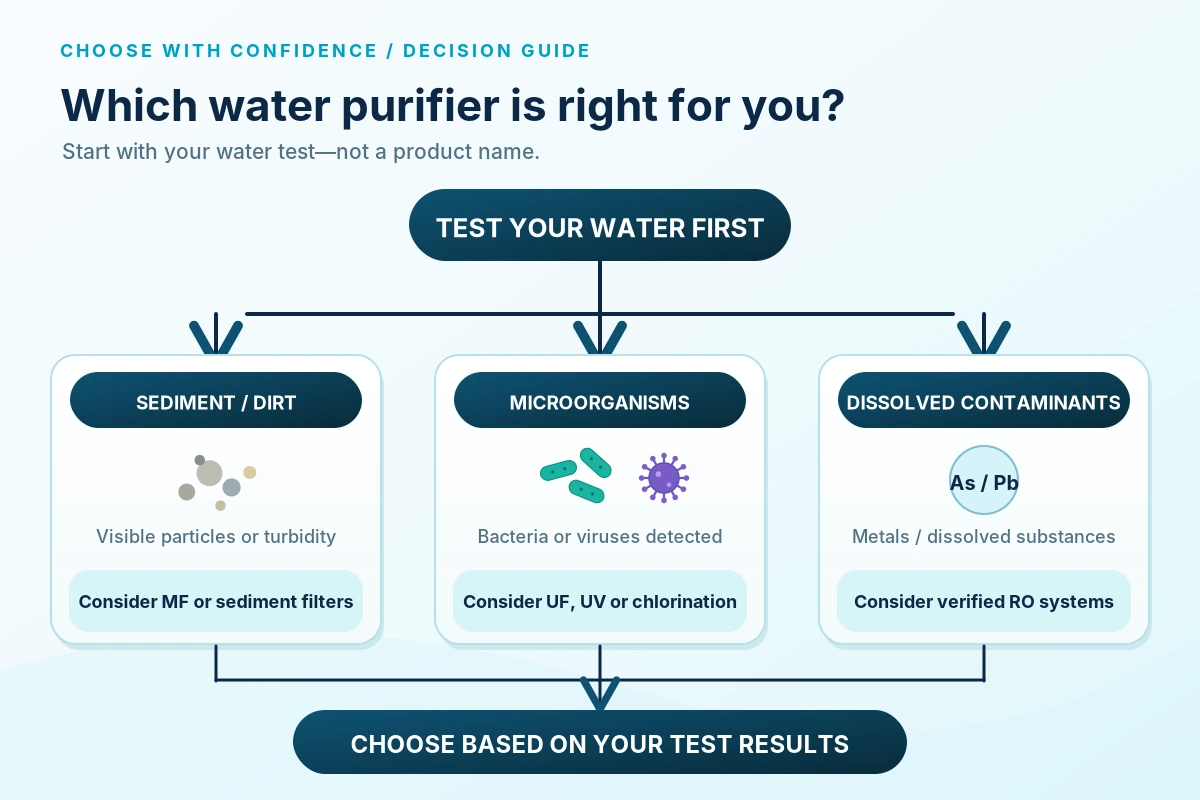
You can’t tell what’s in your water by looking at it. That’s why the test comes first, and the decision comes second.
Heavy-metal contamination is a real concern in parts of Bangladesh, especially where groundwater is used. If you want to be sure about whether there are any dangerous substances, such as heavy metals, present in your water, you can take a free water test today.
Not Sure Which One You Need? Start With a Free Water Test
You now know that MF, UF, UV, and RO solve different problems. But choosing between them still depends on one thing: “what is actually in your water.”
Test first. Then match the technology to the result.
Ultima’s free water test can help you understand key aspects of your water quality, and the report is yours whether or not you buy. Then you can choose calmly whether that is one of Ultima’s RO water purifiers or something else.
Already have a water test report?
Keep reading:
Learn what to check before you buy in our water purifier buying guide
For your family: Which Water Purifier Is Right for Your Home?
For your workplace: Which Water Purifier Should You Buy for Your Office?